Brand Exposure
Insights · Brand Strategy

We Don't Design for Small Companies

A true story about a young startup called Equitas, and why we've always designed brands for the future, not the present.

8 Min Read 8 July 2026 Mr. S.M. Ismail
We Don't Design for Small Companies

Over the years, many clients have asked me what makes our approach to branding different. The answer has remained the same for more than three decades: we do not design for small companies.

I remember an incident from around 2012, when three young professionals walked into our office in Nungambakkam, Chennai. They had recently resigned from Cholamandalam Finance and were preparing to launch a new financial services company. They introduced themselves, sat across the table, and told us the name of their new venture: Equitas.
01

The sentence that stopped the room

Like every client, we spent time understanding their vision, their objectives, and where they wanted the business to go. After our discussions, we presented our quotation for developing their brand identity. Their immediate response was understandable: they were only a startup, and they asked whether we could reduce our fees.

I smiled and replied with a sentence that surprised everyone in the room: we do not design for small companies. For a few seconds, there was complete silence. They looked at one another, unsure whether I was refusing to work with them.

We don't design for the company you are today. We design for the company you aspire to become.

So I explained what I meant. We never build a brand around the current size of the business. We build it as though the company will one day become a successful multinational organisation. Our responsibility is not to create an identity for the present moment. It is to create an identity that will still represent the organisation when the business becomes far larger than anyone in the room can see that day.

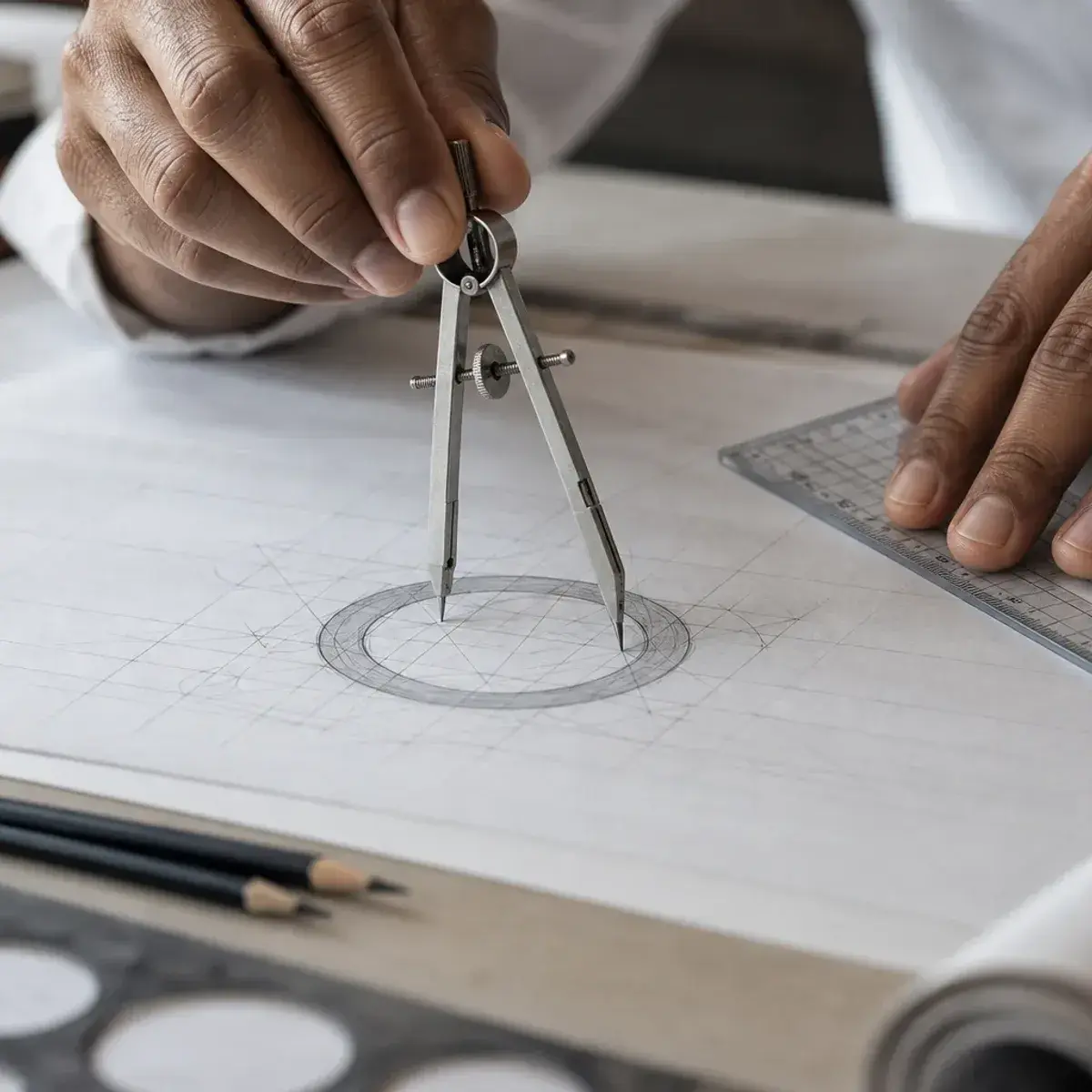
Close-up of precise logo construction work drawn with ruler, compass, and pencil on white paper
A brand has to work in construction, not only in presentation.
02

Why we engineer identities to outlast growth

A logo should never become outdated simply because a company succeeds. A strong identity should comfortably represent new services, new markets, new products, new offices, acquisitions, and future expansion without losing its relevance. That has always been our philosophy at Exposure.

Fortunately, they understood exactly what I meant. They accepted our proposal, and we designed the identity for Equitas. Years have passed, yet that same logo continues to represent the organisation. That is the real test of whether a brand was built as a system or merely drawn as a symbol.

Equitas corporate building photographed in daylight
The identity created years earlier continues to represent the organisation.
03

The second meeting mattered even more

What made the experience even more memorable happened a couple of years later. The same team returned to our office with another assignment. This time, they wanted us to design the identity for a new educational venture they were launching.

As we sat down to discuss the project, one of them smiled and asked whether I remembered telling them that we do not design for small companies. Before I could answer, he continued. When they first came to us, they thought I was being arrogant. Now, he said, they understood exactly what I had meant.

By then, Equitas had grown rapidly, secured major investment, expanded into multiple business verticals, and the identity had moved with the organisation without losing its clarity.

Mr. S.M. Ismail

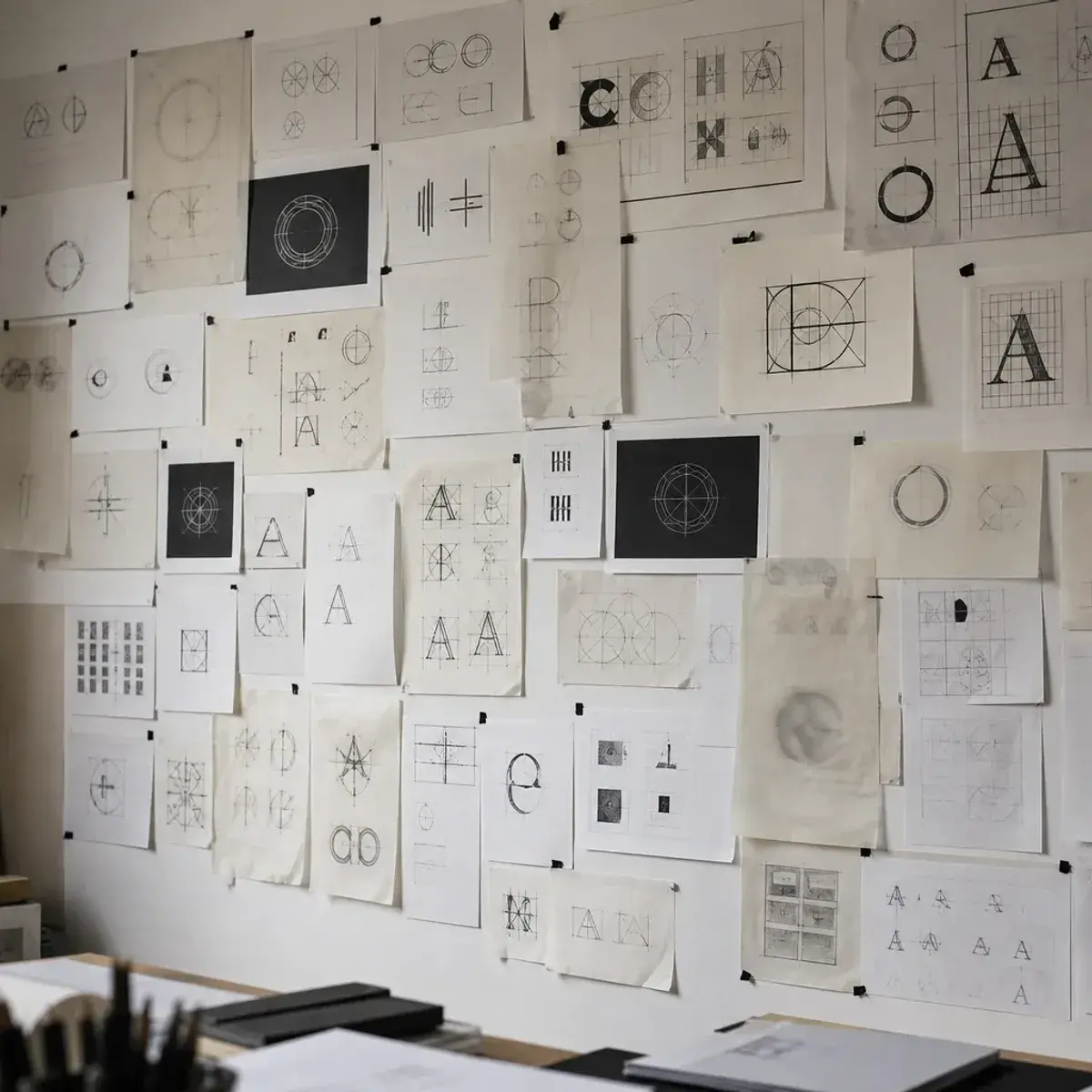
Wall of brand identity sketches, typographic studies, spacing diagrams, and logo explorations in a design studio
The work behind a durable identity is usually quiet, methodical, and structural.
04

A brand should be ready before the business arrives there

Every business starts small. But no entrepreneur starts a business hoping it will remain small forever. That is why we do not design for the company standing in front of us today. We design for the company they aspire to become tomorrow.

This is also why we have never followed design trends just to appear current. A brand identity is not successful because it looks fashionable for a season. It is successful if it functions, scales, reproduces well, and remains appropriate over decades of use.

Startup founder looking at a large city skyline through office glass, suggesting long-term ambition and future growth
A responsible identity should support the ambition before the scale is visible.
05

What this means for founders today

If you are building a business with long-term ambitions, your brand identity should be engineered for where you are going, not where you are starting. That principle applies whether you are launching a startup, preparing for investment, entering a new category, or building an institution that must carry credibility over time.

At Exposure, we do not believe a logo should merely look attractive. It must function in the real world, scale across touchpoints, and remain relevant for decades.

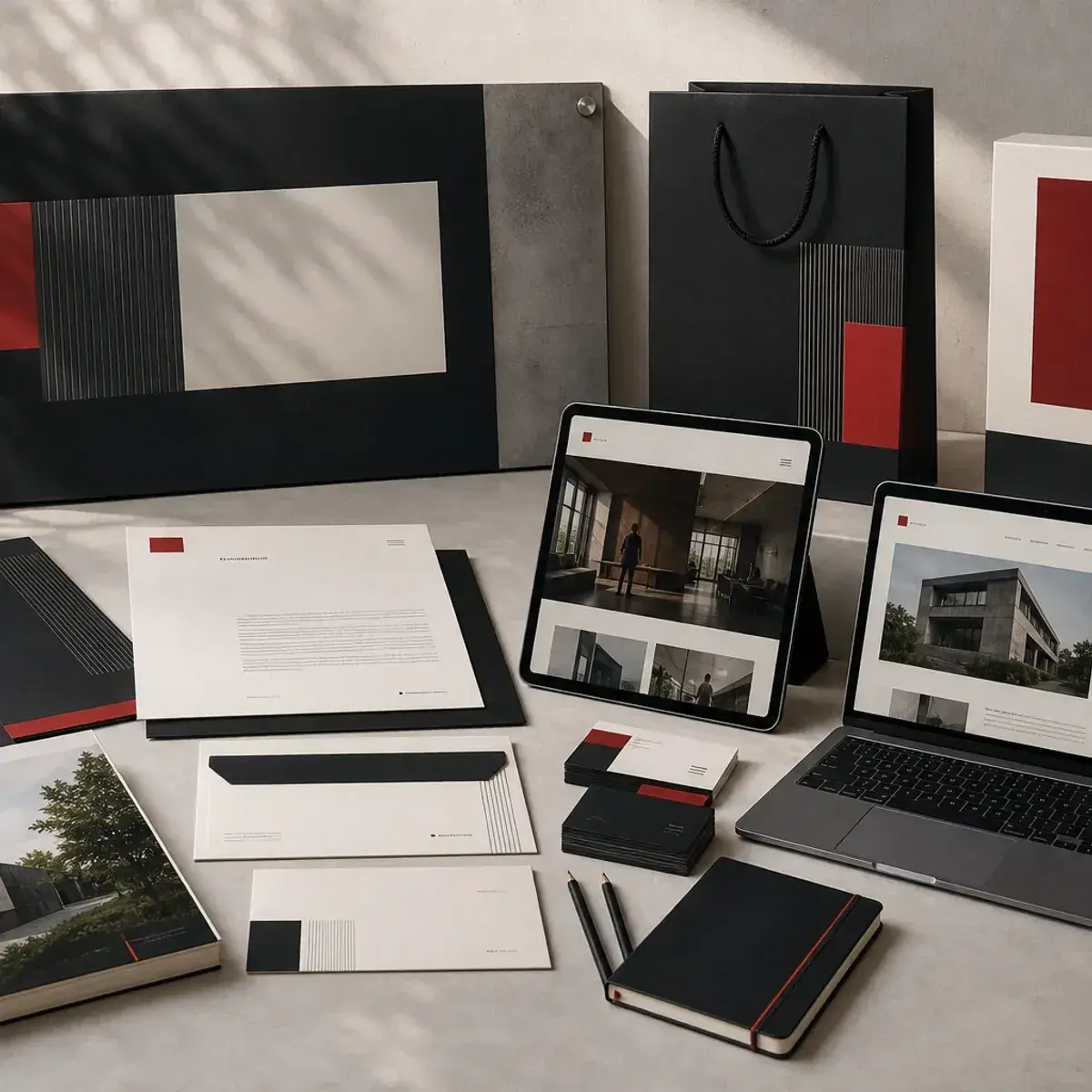
Collection of signage, stationery, business cards, website screens, and packaging working as one coherent identity system
One identity, many applications. That is where brand engineering proves itself.

This philosophy has guided our work for over 35 years. Whether the company is young or established, the goal is the same: to create an identity that can carry growth, complexity, and credibility without losing the original intent. It is not just how it looks, but most importantly how it works.

FAQ

What does it mean to design for the future, not the present?

It means the identity is built to survive growth. A mark should still feel appropriate when a business expands into new services, new markets, or new formats years after launch.

Why can a startup need a more disciplined identity system than a large company?

Because early choices harden quickly. A weak identity creates confusion as soon as the company starts hiring, printing, presenting, fundraising, or launching new offerings.

What makes a brand identity future-proof?

Clarity, reproducibility, and room to extend. The brand must work across signage, stationery, packaging, digital, and future sub-brands without being rebuilt every time the business evolves.

Author

Mr. S.M. Ismail

Founder, Exposure

Mr. S.M. Ismail founded Exposure in 1991 and has spent more than three decades building brand systems that remain usable, credible, and relevant as organisations grow.

35+ Years ExperienceAbout Exposure

Share

Newsletter

Studio notes, when they are worth sending

We share occasional thinking on brand identity, implementation, and longevity. No noise, no fixed cadence.

Request the notes

Good design is only half the work. The other half is keeping it consistent.

Consistency is an operational outcome, not a creative one. It takes process, ownership, and ongoing attention.